YouTube Niche Research in 2026: How to Choose a Faceless Niche Before You Make a Single Video
There is a hard truth most new creators do not want to hear: effort does not rescue a bad niche. You can upload on schedule for a year, learn scriptwriting, learn editing, learn every AI tool that ships this quarter, and still end up with a channel nobody watches, because the decision that mattered most was made in week one and never revisited.
I have been building YouTube channels since 2017, mostly faceless channels aimed at English-speaking audiences in the US, UK, Germany and Japan, and I have watched people publish 50, 100, even a few hundred videos with almost nothing to show for it. They were not lazy. They picked a niche the way you pick a hobby: by personal taste, by scrolling their own homepage, by cloning the first viral video they saw. Then they expected the revenue of a premium market while serving an audience advertisers barely bid on.
This article is the niche research process I actually use. It is not a shortcut and it is not a promise. It is a way to read a market before you spend three months producing for it.
Not all views are worth the same
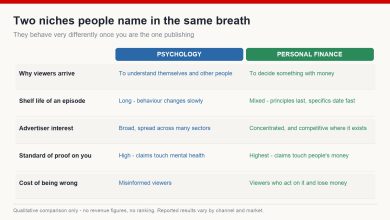
Most beginners optimise for one number: views. That number alone tells you almost nothing about revenue. A million views from a low-CPM region is a completely different business from a million views from the United States. A million Shorts views is a different business from a million views on a 25-minute video. A million views on generic entertainment is a different business from a million views in finance, software, insurance or B2B tooling.
Three things decide whether a channel can carry real revenue: views, RPM, and your capacity to keep producing. RPM (revenue per mille) is what actually lands in your account per 1,000 views after YouTube takes its share. When RPM is low you need enormous volume before the numbers mean anything. When RPM is healthy, a much smaller audience can support the same result.
So niche selection is not “what topic gets views”. It is: does this topic have real demand, an audience advertisers value, room for a new channel, content that can hold attention for long-form, and a format you can produce repeatedly without burning out?
Step 1: build a clean research account
This step sounds trivial and it is not. Do not research niches from your personal Google account. That account has years of watch history attached to it, and YouTube is very good at showing you more of what you already watch. If your homepage is full of cooking, football and music, you will mistake your own habits for a market trend.
Create a fresh brand account
Open a new brand account that exists for exactly one purpose: niche research. Do not watch entertainment on it. Do not play music on it. Do not let anyone else use it. The cleaner you keep that environment, the more honest the recommendations become, and what YouTube surfaces starts to reflect what the platform is actually pushing rather than what you personally like.
Set the region to the market you want to serve
If the plan is an English-language faceless channel, set the account region to the United States and browse as that audience. Advertisers in the US, UK, Canada, Australia, Germany and Japan generally bid higher than in low-CPM markets, which is why the same view count can be worth several times more depending on where the viewer sits. Revenue is never only “how many views”. It is also “who is watching”.
Step 2: six filters for a niche worth entering
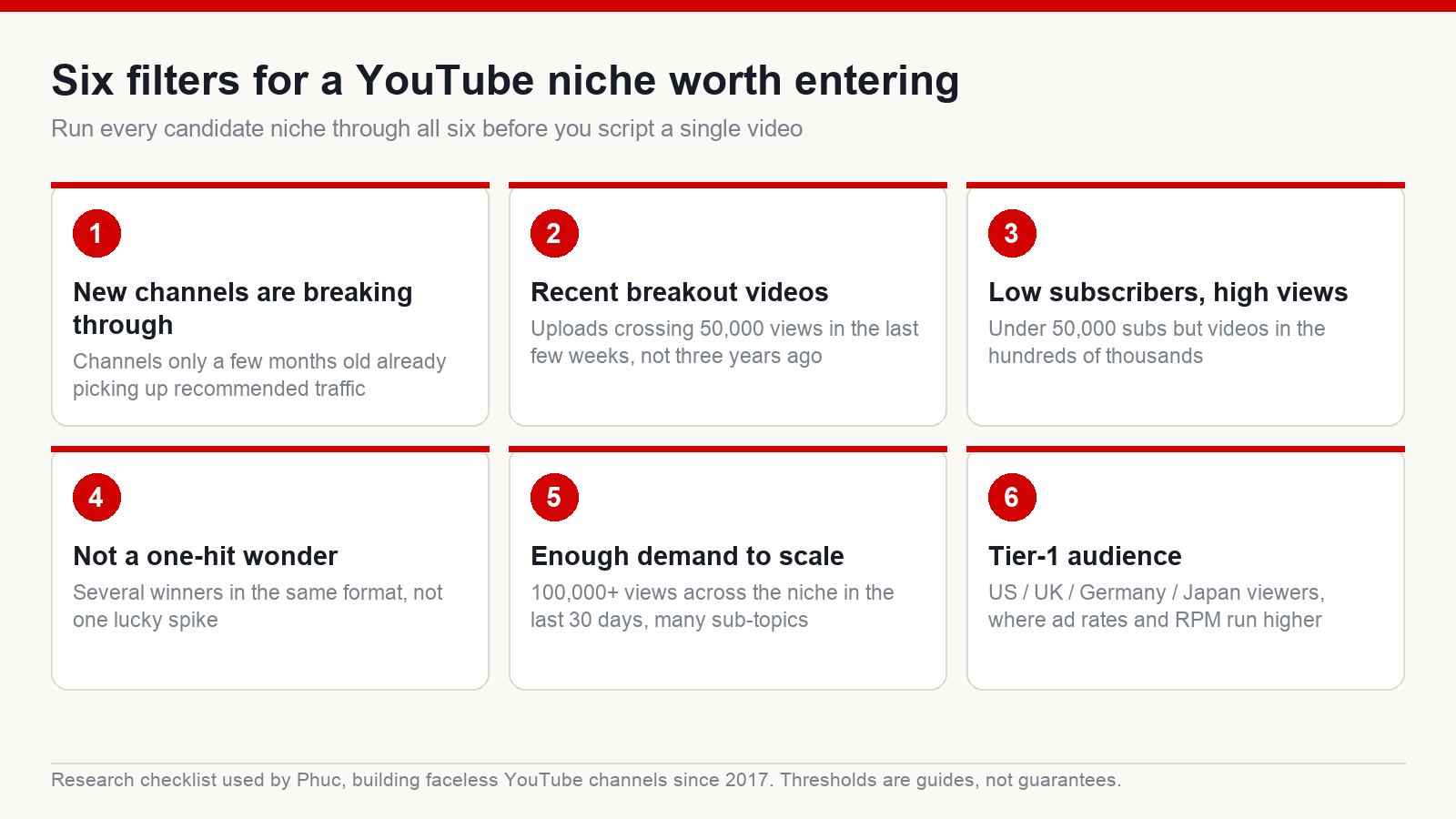
Once the research environment is clean, you start filtering. A million-view video is not, by itself, a reason to enter anything. These are the six checks I run on every candidate niche.
1. New channels are breaking through
Do not only look at the giants. A large channel has advantages you cannot copy: legacy subscribers, a loyal audience, years of recommendation history, brand recognition. The question that matters is whether a new channel can still grow here. If every small entrant stalls while three incumbents take all the traffic, be careful. If channels that are a few months old already have videos climbing, that is a genuinely strong signal.
2. Recent breakout videos, not old ones
A video that went viral three years ago tells you very little about this year. Look for recent uploads crossing roughly 50,000 views in a short window. The number is not sacred, but it is a useful line: past 50,000 a video has clearly gone beyond friends, existing subscribers and thin search traffic, which usually means the recommendation system picked it up.
Check when the spike happened, not just the total. An 80,000-view video from ten days ago is more informative than a million-view video from five years ago. Formats now rise, get cloned and saturate within months, so recent signal beats historical signal.
3. Low subscribers, high views
This is my favourite signal. A channel under 50,000 subscribers with videos in the hundreds of thousands means the views are not coming from its own subscriber base. They are coming from the homepage, suggested videos and search. In other words, YouTube is actively pushing that content to people who had never heard of the channel, which is precisely what a new channel needs to happen to it.
4. Not a one-hit wonder
A one-hit wonder is a channel with a single breakout video and a flat line either side of it. It fools a lot of beginners: you see five million views, you copy the format, and nothing happens, because that video won on a short-lived trend or a shock hook that cannot be repeated.
Open the channel’s video tab and look at the whole catalogue. If one video is wildly above the rest, treat it as noise. If many videos in the same format land in the same range, that is a pattern, and patterns are what you can build a production line on.
5. Enough demand to scale
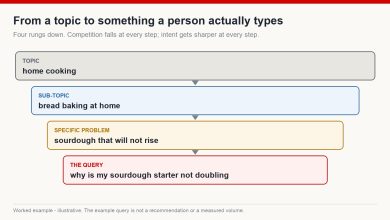
A niche can be interesting and still be too small. A reasonable floor is something like 100,000 views across the niche in the last 30 days, but I want more than a floor: several videos currently climbing, several channels earning views, and multiple sub-topics rather than one keyword carrying everything.
Narrow topics run out of story. If ten videos exhaust your ideas, you have no series, no thumbnail variations, no recurring characters, no engine. That is a niche that can earn something and never becomes a system.
6. A tier-1 audience is reachable
If revenue matters, prioritise niches that can pull viewers from the US, UK, Germany, Japan and similar markets, not only because RPM is higher but because more advertisers compete in more categories there. Personal finance, technology, AI tooling, software, health, education, business, careers, English-language storytelling, faceless documentary, true stories and animal rescue all tend to travel well when they are packaged properly.
One caution: English is not a magic switch. English-language YouTube is brutally competitive. You still need the right sub-niche, the right format and enough quality to hold attention.
Step 3: the rule of the majority
Once you have a shortlist, you still have to decide which slice of the niche to own. This is where I use what I call the rule of the majority, and it is deliberately unromantic. Instead of asking “what should I create?”, you ask “across the videos that already won, which sub-topic appears most often?”
Find channels doing roughly three to five million views a month or more. These are market-validated. You are not copying the channel; you are harvesting data from its strongest videos. Open the Popular tab, take the twelve highest-viewed videos, and tag each one by sub-topic.
Say those twelve break down as three videos about snakes, four about car chases, and five about police and animals. The strongest slice is not snakes and not car chases. It is police and animals, because it holds five of the top twelve. The market has already told you which packaging it responds to.
Creativity still matters, but creativity without data is just guessing in public. Early on, learn from what has already won, then build a version that is newer, deeper or better told. That is informed creativity, not cloning.
Step 4: publish on a 4:1 ratio
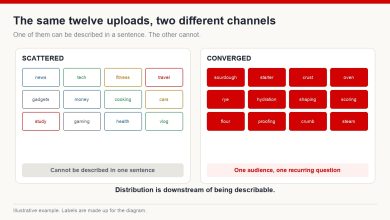
One of the fastest ways to kill a new channel is scattered publishing: a different topic every week, a different thumbnail style, a different narrative voice. The problem is not variety in the abstract. The problem is that YouTube has not yet worked out who your channel is for.
The fix is simple. Four videos in the core niche, one in an adjacent sub-topic. If the core is police and animals, publish four videos in that lane, then take your fifth from another cluster in that top-twelve list, such as the car chase group. You stay consistent enough for the algorithm to classify you, while still testing a second audience pocket.
Once you have real data you can loosen to 3:1. On a brand-new channel I still prefer 4:1, because positioning is worth more than variety at that stage.
Step 5: optimise for RPM, not only for views
Revenue is not a function of view count alone. It also depends on RPM, video length, retention, how many ad slots a video can reasonably carry, viewer geography, topic, and how comfortable advertisers are with the subject. A high-view, low-RPM niche can leave you chasing millions of views for a modest return, while a smaller but better-monetised audience gets there with far less volume.
Why 28 to 30 minutes is worth considering
If the topic supports it, longer videos can carry more ad placements, which raises the revenue you get from the same audience. That only works if retention holds. A long video that sags is worse than a tight short one, because weak retention also removes the algorithm’s reason to keep promoting it.
Never pad. Viewers detect filler almost immediately. If your idea runs out at eight minutes, publish eight minutes. If you want length, build it structurally: a strong hook, a setup, a first complication, escalating danger, a twist, a climax, a resolution and an emotional close. Length should come from story architecture, not from stretching.
Quality beats speed, and speed comes from process
In an era where anyone can generate a video in an afternoon, quality is the scarce thing. A video made in three hours is publishable. A video given five or six hours often has a tighter script, a sharper hook, a voiceover with actual emotion, fewer visual errors, better music and a thumbnail with a real concept. Small differences at every stage compound into a large difference in the result.
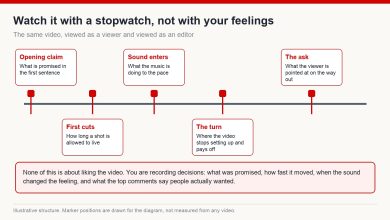
Western audiences have already seen a great deal of very good content. Mechanical pacing and a lifeless narrator lose them within seconds, and once retention drops the algorithm stops helping. That said, quality does not mean slow forever. Speed should come from repeatable process: script templates, thumbnail templates, a fixed competitor-analysis routine, reusable prompts for imagery and voice, a music library sorted by mood, and a pre-publish checklist.
Use AI to upgrade content, not to flood the feed
AI is genuinely powerful, and it is also the reason many channels now fail faster. Mass-generated scripts, flat synthetic narration, recycled imagery and rigid templates produce videos that nobody finishes. At best they underperform. At worst the channel gets read as low-value, unoriginal content.
A better use is analysis. Take a competitor’s video and ask a model such as Gemini to break down its opening hook, story structure, tone, retention beats, emotional arc and the reason it plausibly travelled. Then do not ask for a rewrite. Ask for a new script aimed at the same audience with a different setting, different characters, a different climax and a different message, with a strong hook in the first five seconds and a structure that holds for a long-form faceless video.
For narration, tools like ElevenLabs can produce voices that sound natural enough for an international audience. Still edit the script so it reads like speech rather than an essay. Long unbroken paragraphs read aloud sound exactly like what they are.
The small stuff: raw SEO before upload
Experienced uploaders still do the boring pass before publishing: rename the video file, rename the thumbnail file, put the main keyword in the title, describe the actual topic in the description, use keywords naturally, keep hashtags restrained, and file the video into a playlist that matches the niche.
None of this makes a weak video succeed. It helps YouTube classify a video correctly, which matters most while a channel is still new and the system has little history to work with. Instead of final_video_123.mp4, ship police-dog-rescue-wild-animal-story.mp4 with a matching thumbnail filename. Small, cheap, worth doing.
If you run more than one channel
Running a single channel? Skip this. Running several? Then treat it as an operations problem: separate browser profiles, separate logins, separate email accounts, separate asset folders, a documented upload routine. The point is limiting knock-on risk when one property runs into trouble.
One thing needs saying plainly: operational hygiene is not a substitute for content quality, and it is certainly not a way to work around platform rules. Read YouTube’s own policies and stay inside them. The foundation is still content that is genuinely worth watching, not repetitive, and not designed to mislead viewers.
The full workflow, in order
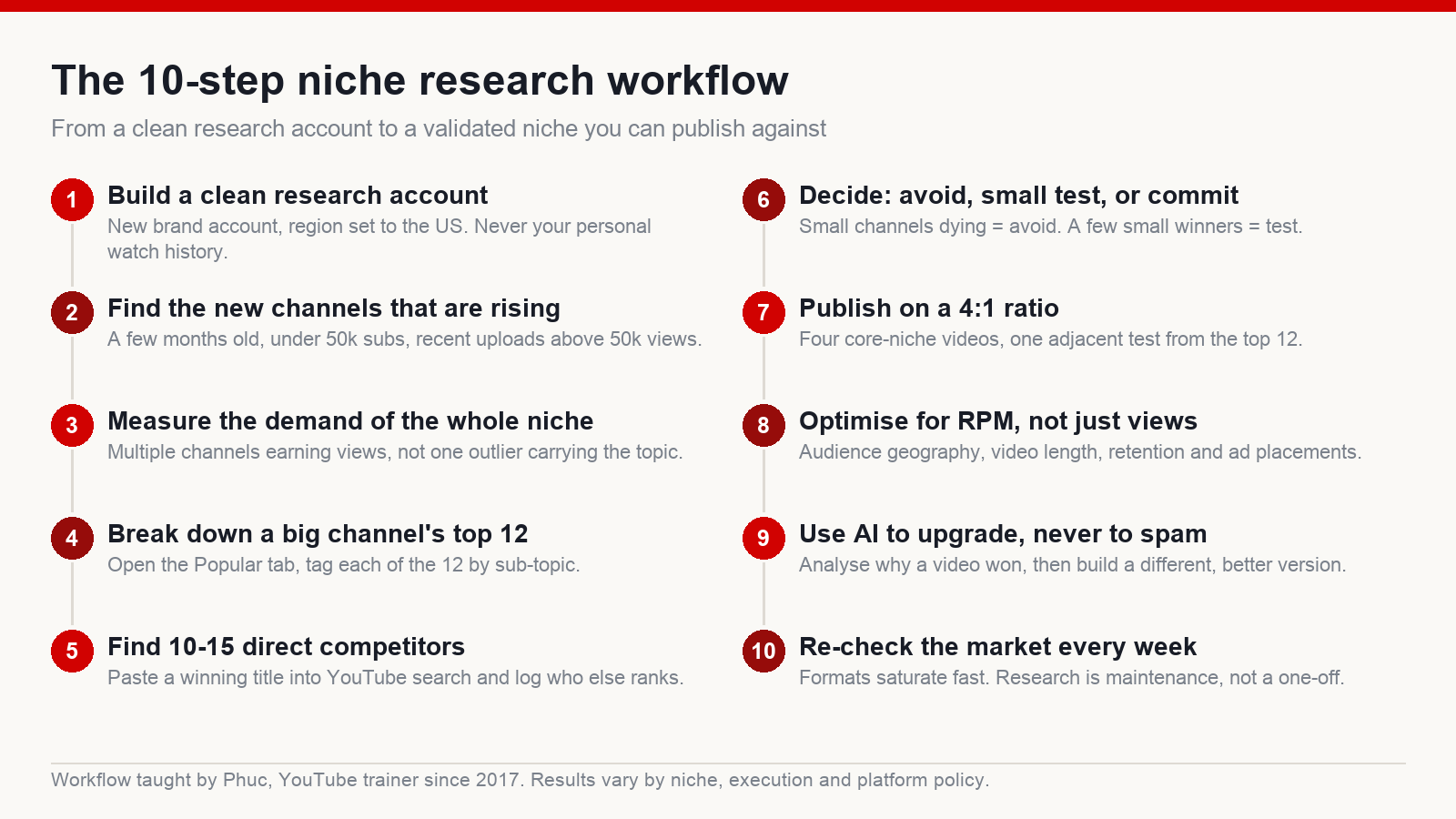
- Build a clean research environment. New brand account, region set to your target market, research viewing only.
- Find the new channels that are rising. A few months old, under 50,000 subscribers, recent uploads above 50,000 views, more than one winner.
- Measure demand across the niche. Several channels earning views, healthy 30-day totals, multiple sub-topics to expand into.
- Break down a big channel’s top twelve. Open the Popular tab, tag each video by sub-topic, take the majority slice.
- Find direct competitors. Paste a winning title into YouTube search and log 10 to 15 channels working the same concept: average views, subscribers, cadence, last upload.
- Decide. Only incumbents winning while newcomers stall means avoid. A few small channels climbing means test. Broad, healthy signal means commit.
- Publish 4:1. Four core, one adjacent. Track CTR, retention, views and traffic sources. Re-read the data after 10 to 20 videos.
- Optimise RPM and retention. Target tier-1 audiences, use length only where it is earned, invest in the hook, the narration and the edit.
- Use AI to upgrade. Analyse competitors, write something genuinely new, use high-quality narration, check originality before publishing.
- Re-check weekly. Which formats are saturating, which are rising, which small channels just broke out, which thumbnails are being cloned to death.
Good creators are not only producers. They are observers.
Five mistakes that keep channels stuck
- Choosing by personal taste. What you enjoy and what a market wants are different questions. Start with demand, then find the part of it you can stand doing for a year.
- Watching views, ignoring RPM. A high-volume, low-value audience is exhausting to serve. Think about the quality of a view, not only the count.
- Copying one viral video. One hit proves nothing. Check the whole channel, then several channels, then recent signal.
- Trading quality for speed. Nobody cares which tools you used. They care whether the video was worth finishing.
- Skipping competitor analysis. Without it you are guessing, and guessing on YouTube is expensive in both time and money.
A realistic word about income
Any revenue figure you see quoted, a $100-a-day target included, is a planning number and not an outcome anyone can promise you. Real results depend on the niche, content quality, RPM in each market, YouTube and AdSense policy, and how long you keep going. Policies change, formats saturate, and plenty of well-researched channels still do not work out. This article shares a method, not an income claim.
Frequently asked questions
Is niche research really more important than production quality?
They are not in competition, but research comes first in sequence. Excellent production inside a closed niche still struggles, whereas decent production inside an open niche has room to improve. Fixing a niche later means restarting positioning almost from scratch.
Why target US or Western audiences?
Advertiser demand in markets like the US, UK, Canada, Australia, Germany and Japan is generally higher, which tends to lift RPM. The same number of views can therefore produce very different revenue depending on where viewers are.
What does a channel under 50,000 subscribers with high views tell me?
It suggests the views are coming from recommendations and search rather than from an existing subscriber base. For a newcomer, that is evidence the door is still open.
Should every video be 28 to 30 minutes?
No. Longer videos can carry more ad placements, but only retention makes that worthwhile. Publish the length the story actually supports.
What exactly is the rule of the majority?
Take a strong competitor’s twelve most-viewed videos, tag each by sub-topic, and build your core niche around the sub-topic that appears most often. It replaces intuition with a count.
What does a 4:1 publishing ratio do?
Four core-niche videos plus one adjacent test keeps your channel signal clear enough for the algorithm to classify, while still letting you probe a nearby audience.
Is it acceptable to use AI on a faceless channel?
Yes, as a tool for analysis, scripting, narration and production speed. It is not acceptable as a way to mass-produce near-identical videos. Read YouTube’s guidance on repetitious and inauthentic content before you scale anything.
Does basic SEO still matter?
Yes, modestly. Filenames, titles, descriptions, keywords, hashtags and playlists help YouTube understand a video, which counts most while the channel is new. It is classification, not distribution.
Start with the market, not with the camera
If you want a channel that eventually earns, do not open with “what video should I make?” Open with: which market has valuable viewers, still has room for a new channel, can be produced at volume, and can be served better than the current incumbents? That is a fundamentally different question, and it produces fundamentally different channels.
YouTube has no shortage of hard-working creators. It has a shortage of creators who research the market before they produce for it. Pick the niche carefully, serve a valuable audience, protect retention, and use AI to raise quality rather than volume, and the rest of the work at least has somewhere to land. It is not easy. It is knowable.
If you want to go deeper on building a faceless channel for international audiences, the full training system lives at mmoyoutube.com.